Table of contents
Selecting the right equipment for clearing land can significantly affect efficiency and results. Weighing the differences between mulchers and chippers is not just a matter of preference but an essential step for those seeking optimal performance and sustainability. Delve into the following sections to uncover which tool fits specific land clearing needs and why making an informed decision is vital for any successful project.
Understanding mulchers and chippers
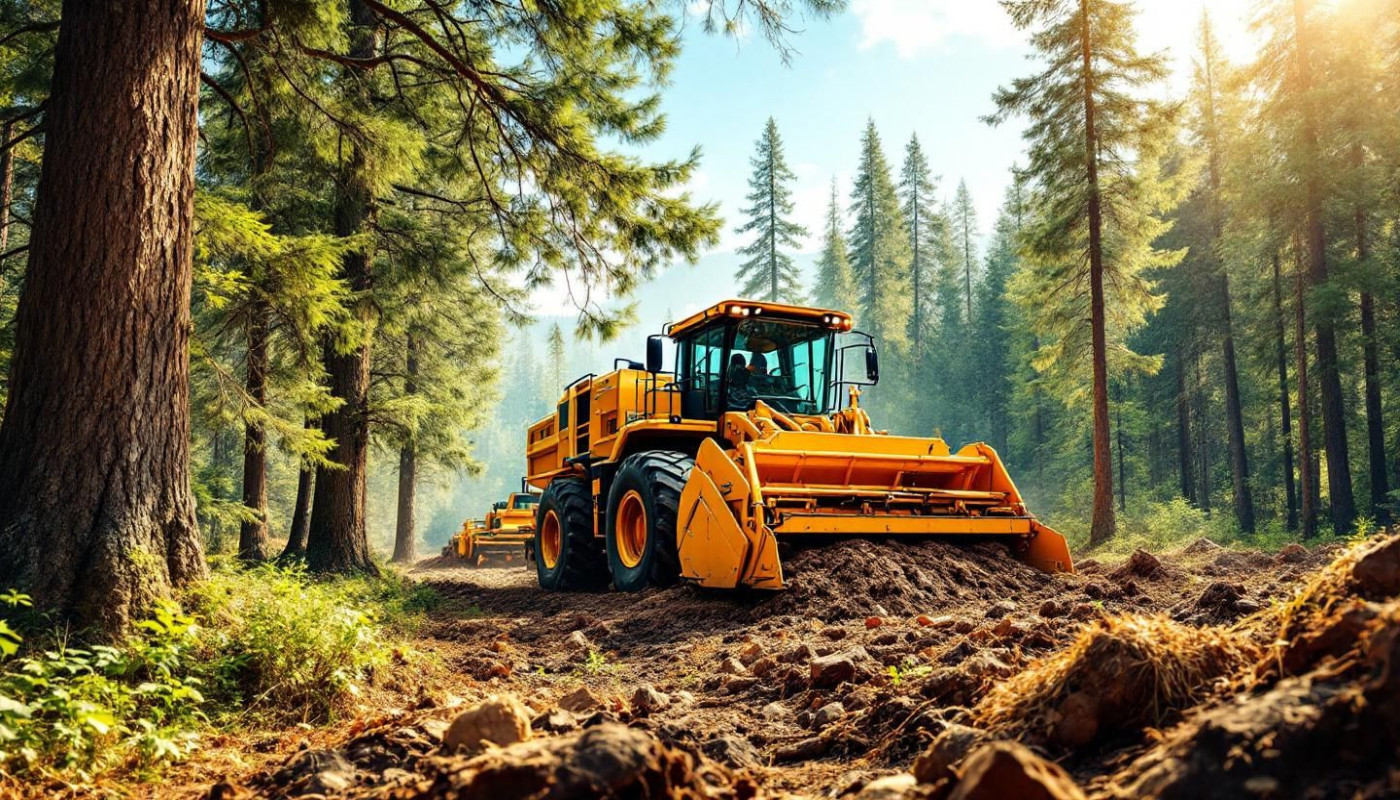
When tackling land clearing, the choice between mulching equipment and wood chippers plays a decisive role in vegetation management strategies. Mulchers operate by pulverizing brush, branches, and small trees into fine, spreadable mulch directly on-site. This process efficiently transforms assorted organic material into a protective ground layer, making mulchers highly suitable for brush removal and managing overgrown undergrowth. In contrast, wood chippers are designed to process larger limbs and trunks, utilizing sharp blades or hammers to cut wood into uniformly sized chips. These chips are often collected for use in landscaping or as biomass fuel. Each machine's operational mechanism directly affects the outcome: mulchers create a fine, soil-enriching mulch, while wood chippers produce larger, more uniform wood chips that are easier to transport or repurpose.
The reduction ratio serves as a technical benchmark for both mulching equipment and wood chippers, indicating the extent to which bulky vegetation is reduced in volume after processing. For instance, a reduction ratio of 10:1 means that ten units of raw vegetation are condensed into one unit of processed material. Mulchers generally offer higher reduction ratios, making them particularly effective for dense brush removal and converting organic debris into manageable mulch. Wood chippers, while delivering a lower reduction ratio, excel at breaking down thick, woody material unsuitable for mulchers. Understanding this concept helps users select the optimal equipment for their specific land clearing requirements and vegetation management goals.
Selection between these machines also depends on the type of vegetation and the intended final product. Mulchers are especially effective with softer vegetation, saplings, and mixed brush, providing rapid ground coverage for erosion control and habitat restoration. On the other hand, wood chippers are more appropriate when dealing with substantial logs or tree limbs, processing them into consistent wood chips suitable for commercial or residential applications. Recognizing the distinct operational strengths of mulching equipment and wood chippers allows for tailored solutions in brush removal and broader land clearing projects.
In sum, making an informed decision between mulchers and wood chippers requires a practical assessment of the vegetation present, desired end product, and specific vegetation management objectives. Both tools have proven their value in different contexts within the land clearing sector, and understanding their unique capabilities ensures efficient, cost-effective, and environmentally sound operations. Matching the correct machinery to the unique needs of any given site not only enhances productivity but also contributes to long-term ecosystem health and responsible land stewardship.
Performance and efficiency factors
Evaluating land clearing efficiency requires an understanding of how mulchers and chippers differ in performance. Mulchers use high-powered rotating drums or blades to grind vegetation, producing fine, evenly distributed mulch that can be left on-site for soil enrichment. This method excels in rapid site preparation by covering large areas with consistent debris reduction. Brush chipping, by contrast, involves feeding branches and trunks into a chipper, which slices material into larger, more uniform chips suitable for removal or reuse. The output debris size is a key distinction: mulchers create finer material, whereas chippers generate coarser chips. Adaptability is another factor—mulchers perform best in dense underbrush and uneven terrain, while chippers are optimal for processing felled trees and brush piles. Horsepower is a significant technical term in forestry equipment; higher horsepower allows both machines to handle thicker material and operate more efficiently across varied land conditions. Certified forestry operations experts recommend matching the equipment’s capabilities, such as horsepower and output type, to the site’s specific requirements to maximize productivity and minimize operational downtime.
Environmental impact and sustainability
When considering sustainable land clearing, the choice between mulchers and chippers has direct implications for eco-friendly equipment use and soil preservation. Mulchers generally process vegetation on site, returning organic material to the ground as mulch, which supports soil health by enhancing moisture retention, reducing erosion, and promoting nutrient cycling. This approach aligns with biomass recycling, a process in which plant material is reused to maintain soil fertility. Chippers, on the other hand, convert woody debris into chips that can be transported off-site or used for specific purposes such as bioenergy or landscaping, but this can sometimes deplete local soil nutrients if too much organic matter is removed. Responsible vegetation management with mulchers can also aid in habitat restoration by maintaining ground cover and minimizing disturbance to existing ecosystems.
Furthermore, the carbon footprint of eco-friendly equipment plays a significant role in sustainable land clearing. Mulchers often require fewer transport operations, reducing emissions, while chippers may necessitate additional logistics to remove and utilize chipped material. Each method can contribute positively to ecosystem restoration, but careful planning is needed to ensure that soil preservation and habitat restoration are achieved without unnecessary environmental trade-offs. For those seeking detailed guidance and tools for responsible vegetation management, you can find out more about the latest advancements in mulcher and chipper technology by visiting https://mulcher-chipper.com/.
Cost analysis and investment value
Evaluating the equipment cost of mulchers and chippers is a fundamental step in budget planning for land clearing operations. Machinery investment should reflect both the initial purchase price and the ongoing operational expenses, forming the total cost of ownership—a metric that combines acquisition, maintenance, repairs, parts, labor, and fuel consumption over the machine’s lifespan. Mulchers often command a higher up-front investment due to their advanced cutting mechanisms and versatility, but may offer greater value for money through reduced labor requirements and faster processing of materials on site. In contrast, chippers usually present a lower purchase price, yet operational expenses can escalate if additional labor or pre-processing is required, especially for large projects.
When comparing these machines, long-term value extends beyond initial machinery investment. Mulchers excel in productivity for large-scale clearance, minimizing the need for supplementary equipment and delivering cost savings on transport and waste management. Chippers, while efficient for producing uniform wood chips, may incur extra costs in handling bulkier materials and dealing with frequent maintenance due to wear from harder debris. Calculating total cost of ownership enables budget planning that accounts for depreciation, resale value, and the frequency of required service intervals, giving a clearer picture of each machine’s financial impact over time.
Optimal value for money depends on matching the chosen equipment to the project’s scale, frequency, and material types. For contractors and landowners, a detailed cost-benefit analysis—including both direct and indirect operational expenses—provides the data required to select the machinery that best aligns with organizational goals and financial constraints. This approach not only ensures a sound machinery investment but also promotes sustained efficiency and profitability in land clearing operations.
Making the right choice
When tackling land clearing solutions, equipment selection must align closely with specific project requirements, and conducting a thorough site assessment is the initial step. Terrain analysis is fundamental, as mulchers perform efficiently on relatively flat ground and can process a mix of brush, undergrowth, and small trees directly into mulch, making them suitable for maintaining soil health and minimizing debris removal. Chippers, on the other hand, excel when the removal of larger branches or felled trees is necessary, as they convert woody material into chips for disposal or further use. Optimal machinery depends not only on the landscape but also the scale of the area: expansive plots with dense vegetation favor high-capacity mulchers, while targeted clearing of larger timber in confined spaces may benefit from chippers. Consulting with a seasoned land development strategist, drawing from a broad portfolio of varying project scopes, ensures the selection of equipment that maximizes efficiency, matches the unique characteristics of the site, and achieves the desired end-result with minimal resource expenditure.
Similar

Soil health secrets improving garden vitality without chemicals

Transforming Your Space With High-End Art: The Impact Of Luxury Canvases On Home Aesthetics
